


Remote orthodontic monitoring is AI-powered technology that tracks your tooth movement between office visits using smartphone scans taken at home. An AI system analyzes these images, evaluating how your teeth are moving, checking your gum health, and confirming your aligners or braces are fitting properly.
If you’ve been researching orthodontic treatment, you’ve probably heard about this technology. It sounds high-tech, maybe even a little futuristic. But what does it actually mean for you and your smile?
Instead of waiting weeks to find out if your treatment is on track, your doctor can check in on your progress from anywhere. DentalMonitoring is the leading platform in this space, and it’s the system used at VanLaecken Orthodontics in Sioux Falls, South Dakota, a practice whose team includes a diplomate of the American Board of Orthodontics. The technology has changed how orthodontic care works for many patients across the state.
What matters most: remote monitoring supplements your orthodontic care. It doesn’t replace it. Your doctor still directs every aspect of your treatment. The AI simply gives them more frequent, detailed information to work with. Think of it as having an extra set of eyes on your smile between visits.
More practices are adopting this technology because patients want it. Convenience, progress updates, and fewer disruptions to your busy day, that’s what most patients are after. Remote orthodontic monitoring delivers on all three.
How Does Remote Orthodontic Monitoring Work?
At VanLaecken Orthodontics, the process is simpler than you’d expect. Below is a walkthrough from start to finish.
Step 1: Getting Set Up
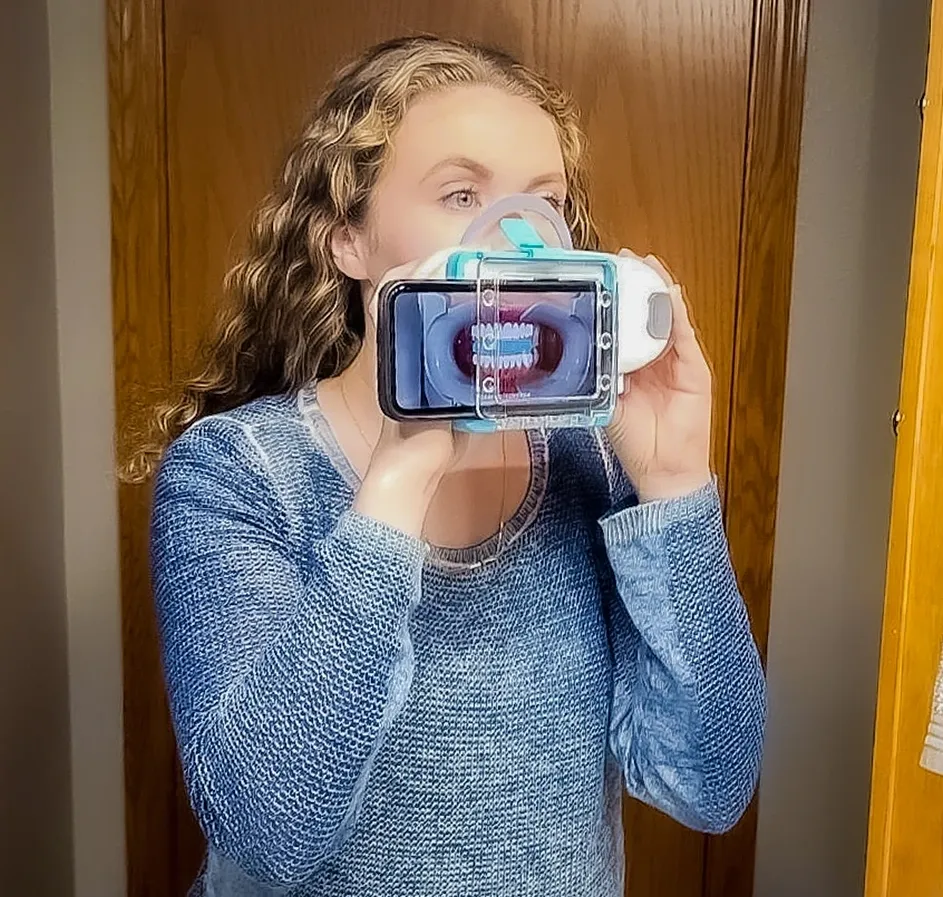
When you get started with treatment, you’ll receive a ScanBox (a small device that helps position your phone) or a cheek retractor. You’ll also download the DentalMonitoring app to your smartphone. Your orthodontic team will show you exactly how to use everything during your visit.
Step 2: Taking Your Scans
On a regular schedule, usually once a week, you’ll take quick photos of your teeth using the app. It takes about 60 seconds. The app guides you through each step, so you don’t have to guess whether you’re doing it right. Follow the prompts, snap the photos, and you’re done.
Step 3: AI Analysis
The AI evaluates your scan right away. It’s looking at several things:
- How your teeth are moving compared to your treatment plan
- The health of your gums
- Whether your aligners or braces are fitting correctly
- Any potential issues that need attention
Step 4: Your Doctor Reviews the Results
The AI flags anything that needs a closer look, and your doctor at VanLaecken Orthodontics reviews those results. If everything looks good, you might get a simple confirmation. If something needs adjustment, you’ll receive personalized instructions through the app.
Step 5: Real-Time Treatment Updates
What makes this different from traditional care? If your doctor sees that you’re ready to move to your next set of aligners early, they can let you know right away. If something isn’t tracking properly, they catch it within days, not weeks. Your treatment plan stays active and responsive.
Benefits of Remote Orthodontic Monitoring
So what does remote orthodontic monitoring actually change about your day-to-day treatment? Here’s what patients in South Dakota and beyond tend to notice first.
Fewer Office Visits, More Free Time
Time is valuable. Every visit to the doctor means coordinating schedules, driving, waiting, and adjusting your day. With remote monitoring, you still have important in-person visits, but you need fewer of them. Your doctor gets the information they need through your scans, saving those office visits for when they’re truly necessary.
Catching Issues Before They Become Setbacks
With traditional care, something like a broken bracket or an aligner that isn’t fitting right might go unnoticed for weeks until your next visit. Remote monitoring changes that dynamic. The AI can detect these issues within days of your scan.
When your team spots a fitting issue on Tuesday instead of at your visit three weeks later, that’s three weeks of treatment time you didn’t lose. Those quick corrections keep your treatment moving forward without unnecessary delays.
Can Remote Monitoring Help Treatment Finish Sooner?
When your doctor can make proactive adjustments based on real-time data, treatment often moves more efficiently. You’re not waiting for your next visit to learn you’re ready for the next phase. Many doctors find that more frequent monitoring helps fine-tune treatment timing, potentially shortening overall treatment length. DentalMonitoring reports that their platform has been used in over 20 million scans worldwide, giving doctors a large data set to refine treatment protocols.
Regular Progress Confirmation You Can Count On
Wondering if your teeth are moving correctly? That uncertainty can be stressful. Remote monitoring gives you regular confirmation that everything is on track. And if it’s not, you’ll know quickly, not weeks from now at your next scheduled visit.
Built for Busy Schedules
Whether you’re a working professional, a teen juggling school and activities, or a parent managing multiple family members’ visits, fewer required trips make orthodontic treatment easier to fit into your life. You handle routine check-ins from home and save your in-person visits for the moments that truly require hands-on care.
Remote Monitoring vs. Traditional Orthodontic Visits
Understanding the differences helps you decide what works best for your situation.
| Aspect | Traditional Visits | Remote Monitoring |
|---|---|---|
| Visit Frequency | Every 4-8 weeks | Continuous tracking with fewer required visits |
| Issue Detection | Found at scheduled visits | AI flags concerns within days |
| Patient Effort | Travel to office for each check | Quick weekly scans at home |
| Convenience | Requires time off work/school | Fits around your schedule |
| Professional Oversight | Periodic in-person evaluation | Continuous AI monitoring + doctor review |
A qualified doctor directs your treatment either way, and that level of professional oversight remains constant whether you’re using remote monitoring or not. Remote monitoring isn’t a DIY alternative to professional care. It’s a tool that strengthens the care your doctor already provides.
So what’s the real difference? Timing. Traditional visits give your doctor snapshots of your progress every few weeks. Remote monitoring provides a continuous stream of information, so your doctor sees what’s happening between those visits instead of piecing things together at each check-in.
Some patients prefer the reassurance of more frequent in-person visits. Others love the convenience of handling routine check-ins from home. Neither preference is wrong, and your team can help you figure out what fits best.
What Does Remote Orthodontic Monitoring Cost?
Remote orthodontic monitoring typically costs nothing extra. Many practices, including VanLaecken Orthodontics in South Dakota, include it in your overall treatment fee for Invisalign or braces. You won’t see it as a separate line item on your bill.
That said, costs can vary depending on:
- The specific practice you choose
- Your treatment type (clear aligners vs. traditional braces)
- The monitoring platform used
Don’t overlook the indirect savings. Fewer office visits mean less time away from work and lower travel costs. For families across South Dakota with long commutes to their doctor, those savings add up quickly over the course of treatment.
Insurance coverage for telehealth orthodontic services varies widely. Some plans cover it; others don’t. It’s worth checking with your insurance provider to understand your specific benefits.
Contacting your orthodontic practice directly is the best way to get accurate cost information. Every treatment plan is different, and your team can walk you through exactly what’s included.
Is Remote Orthodontic Monitoring Right for You?
Remote orthodontic monitoring is a good fit for most patients, but not every patient. The technology works well in many situations, and here’s how to evaluate whether it fits yours.
Who Is a Good Candidate for Remote Monitoring?
- Getting Invisalign treatment? Remote monitoring pairs especially well with clear aligners
- Braces patients who want more frequent progress updates
- Currently in the retention phase and need ongoing monitoring
- Busy professionals with limited time for visits
- Teens and college students with packed schedules
- Long commute to your doctor? This saves trips
- Frequent travelers away from home regularly
What Do You Need to Get Started?
- A smartphone (iPhone or Android)
- Willingness to take your scans on schedule, because consistency matters
- Comfort with basic app technology
When Might It Not Be the Best Fit?
- You strongly prefer in-person interaction for reassurance
- You’re not comfortable with smartphone apps
- You’d rather have all communication happen face-to-face
- You prefer the routine of regular scheduled office visits and find that structure motivating
There’s no substitute for a conversation with your doctor. They can evaluate your specific treatment needs, your lifestyle, and your preferences to help you decide. What works perfectly for one patient might not be ideal for another, and that’s completely fine. The doctors at VanLaecken Orthodontics can help you determine if remote monitoring fits your treatment plan during a free consult.
Frequently Asked Questions About Remote Orthodontic Monitoring
Is remote orthodontic monitoring safe?
A licensed, board-certified doctor reviews every scan and makes all treatment decisions. The AI technology assists with analysis, but your doctor stays in control. VanLaecken Orthodontics’ team includes a diplomate of the american board of orthodontics who oversees scan reviews. You’re not replacing professional care; you’re giving your doctor better data to work with.
How often do I need to scan my teeth?
Most patients scan once a week. The process takes about 60 seconds, and the app walks you through each step for consistent, quality images. Your doctor may adjust the frequency based on your specific treatment phase.
Will I still need in-office visits?
Yes. Remote monitoring reduces routine check-ups, but certain stages require hands-on care. Your doctor will see you for initial consults, appliance adjustments, and other critical treatment stages. Patients visiting VanLaecken Orthodontics locations across South Dakota will still come in for these key milestones.
Does remote monitoring work with braces and Invisalign?
It works with both. Whether you’re wearing traditional braces or clear aligners, the technology can track your progress. The AI is trained to evaluate different types of orthodontic appliances and identify issues specific to each.
What happens if the AI detects an issue?
Your doctor receives an immediate notification. They’ll review the flagged scan and contact you with next steps. This might be instructions you can follow at home, or it might mean scheduling an office visit. Either way, you’ll know quickly, and that’s the whole point.
How is my data protected?
Your scans are encrypted and stored securely, protected under HIPAA-compliant standards just like your other medical records. DentalMonitoring follows strict health data regulations to safeguard your personal information. Ask your doctor’s team for specific details about their data protection practices.